What is a woodblock print?
Woodblock printing is among the earliest techniques used to reproduce both images and text.
The principle is direct: material is carved away from a block, the remaining surface is inked, and an impression is taken on paper. This fundamental process has remained largely unchanged for more than a thousand years.
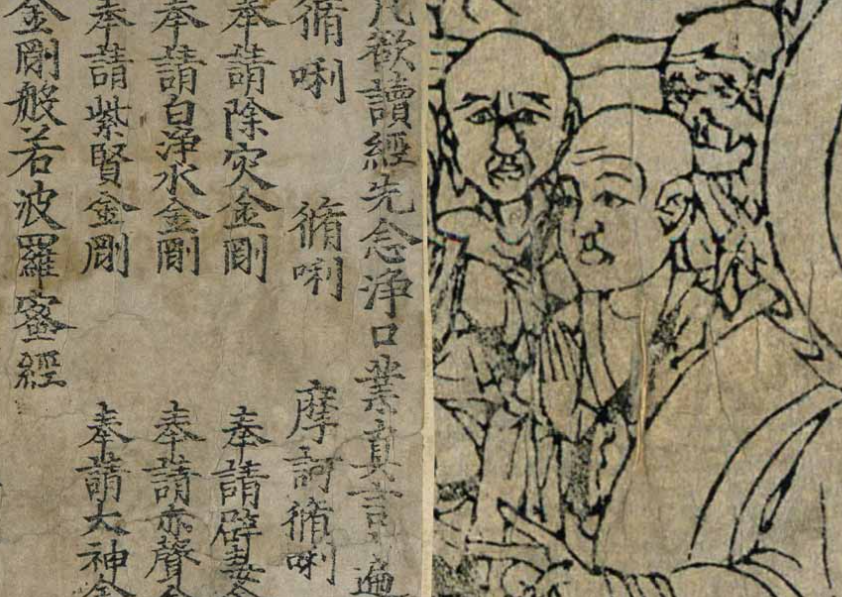
Diamond Sutra, 868
Origins in East Asia
The technique emerged in China during the Tang dynasty in the 7th century. The Diamond Sutra, dated 868, is the most well-known surviving example and is widely regarded as the earliest complete printed book bearing a date. Woodblock printing made it possible to reproduce texts with a consistency and scale that hand copying could not achieve.
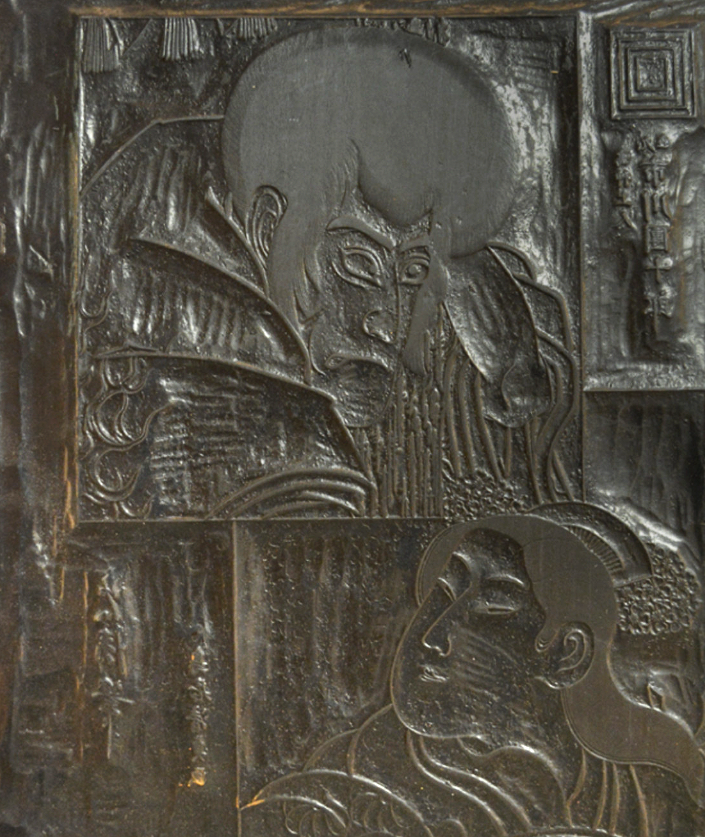
Example of a carved woodblock
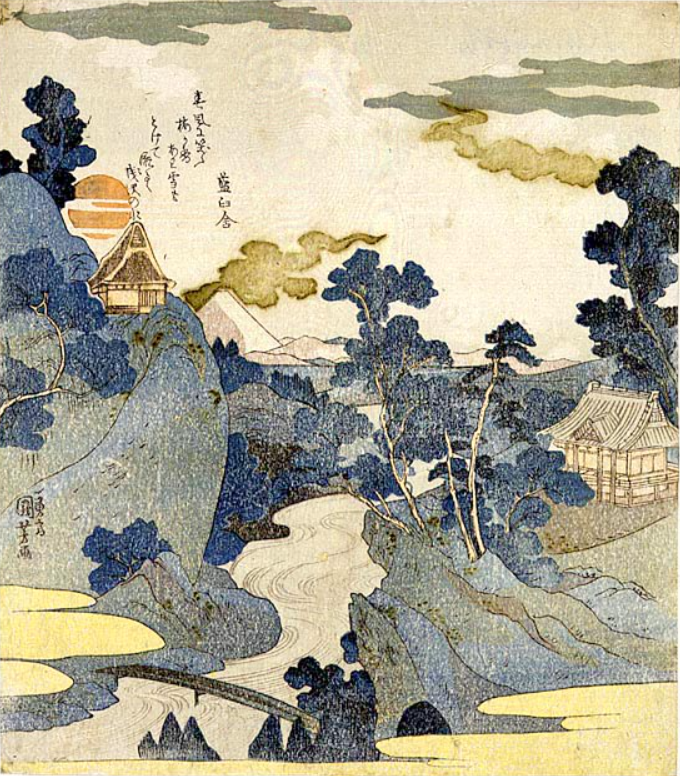
The Stream of Asazawa in Spring
Utagawa Kuniyoshi 1828
My tools and process
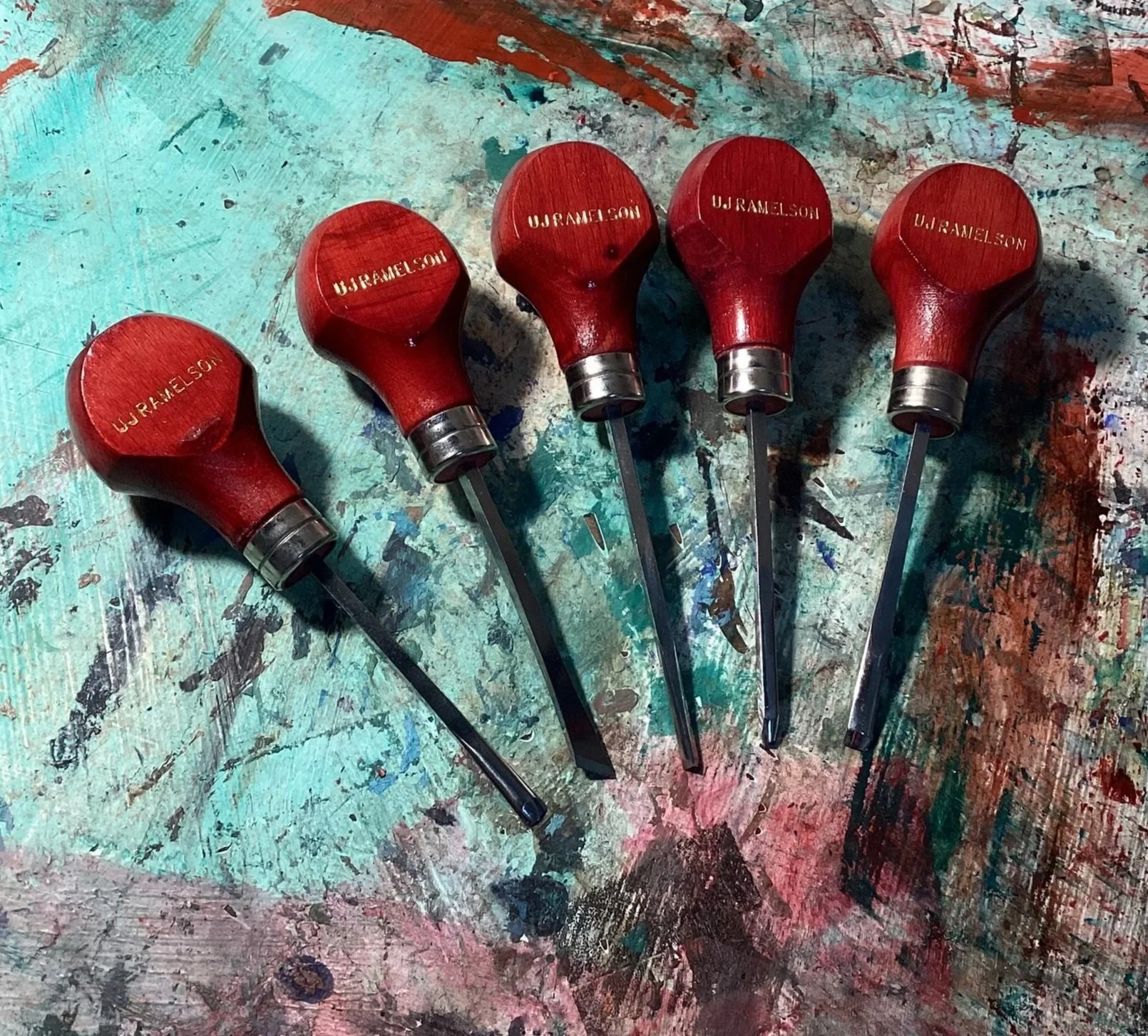
Carving the block is the most time consuming part of woodblock printing. I use steel gouges made for printmaking to remove the areas that will not be inked. After hundreds of hours carving blocks, I’ve learned it can take a toll on the body. The key is good posture and sharp tools.
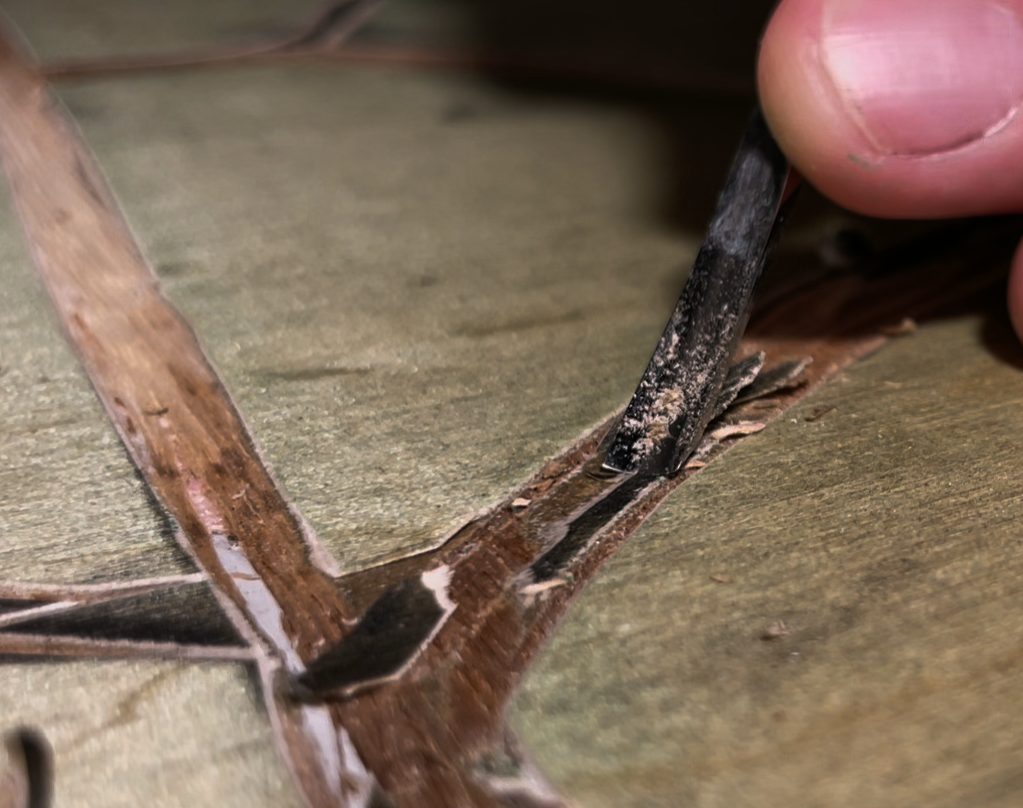
Carving birch plywood, and making some printmakers’ ASMR
Inking the block
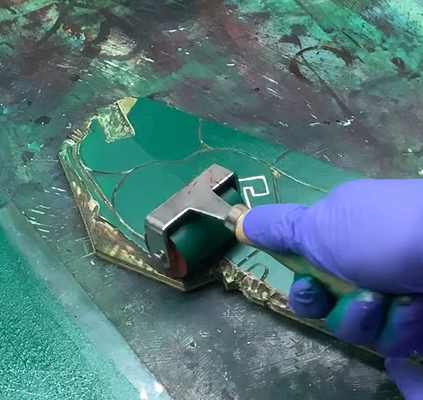
Rolling ink onto a woodblock is a simple but important step in traditional printmaking.
After placing a small amount of ink on a glass slab, a brayer is used to spread it into a thin, even film. The brayer makes a light tacky sound when the ink is ready.
From there, the ink is rolled across the carved block in several passes, coating only the raised lines and shapes. This is what allows the image to transfer cleanly to paper and is central to the look of traditional woodblock print.
Printing on the Press
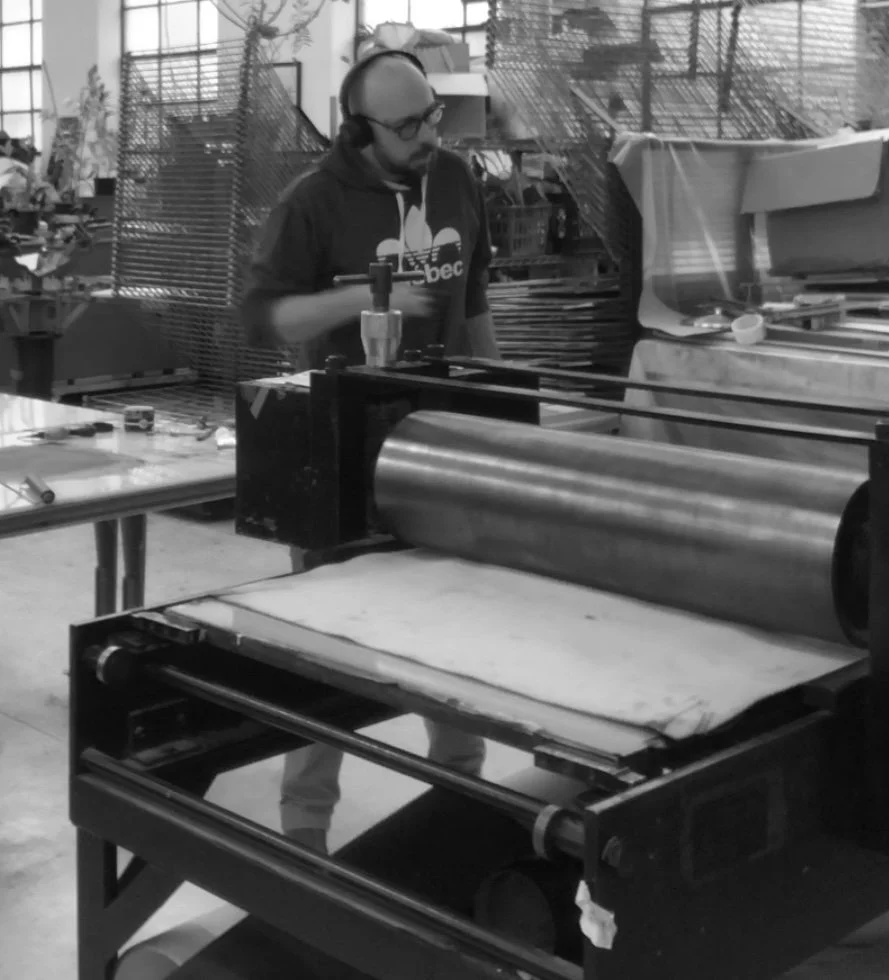
Once the block is inked, the printing paper is laid on top and run through the press.
As the rollers apply pressure, the paper is pushed down into the carved block, picking up both ink and the subtle texture of the wood.
The press works like a large stamp, compressing everything together so the image transfers cleanly and evenly.
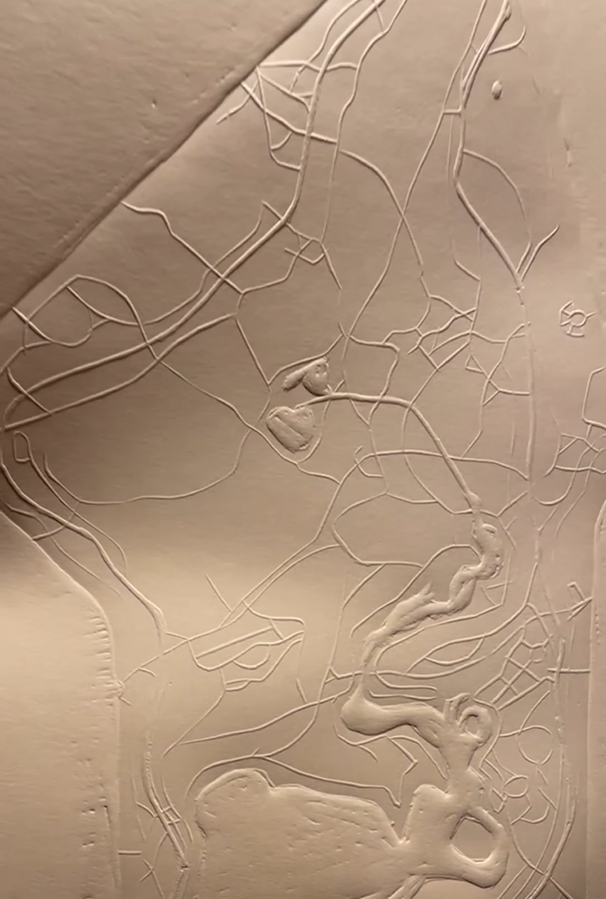
This sheet shows an impression from the Prospect Park woodblock printed without ink.
Printing dry like this highlights the physical character of the block itself. The pressure of the press forces the paper down into the carved areas, creating a clear embossing that reveals the path lines and carved features of the design.
Without ink, the image reads through shadow and relief alone, and you can see how the surface of the wood carries information beyond just the printed color. It gives a sense of how the block interacts with paper during a normal print run and shows that woodblock printing is as much a sculptural process as it is a graphic one.