Chine-Collé
In my last post, we looked at how Japanese woodblock prints captivated 19th century Europe, inspiring Impressionists like Monet, Van Gogh, and Degas with their flat colors, bold lines, and fresh compositions.
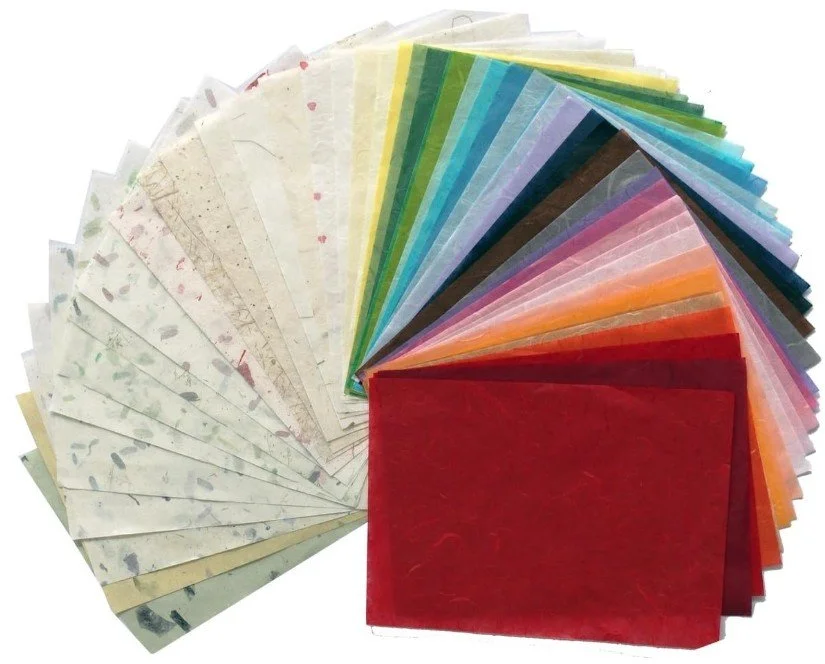
The influence went beyond visuals; it extended to the materials and methods themselves. One fascinating technique that emerged from this exchange is known as chine-collé, which let artists combine printing etching plates with ultra-thin colored papers imported from Asia, allowing them to achieve a “painterly” aesthetic to a traditional printing process. They referred to this technique as “Chine-Collé” directly translated as “China pasted”. It’s important to note, that these new thin colorful papers were also being imported to Europe from China and India as well.
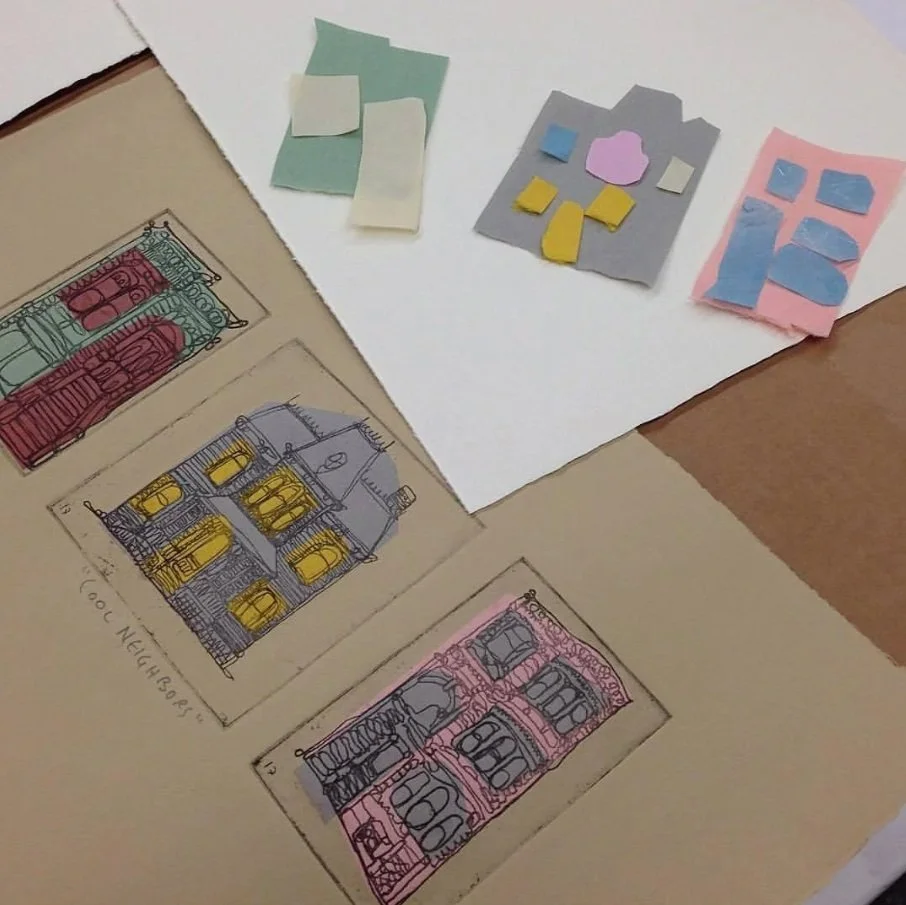
Here I’ve showed what my “Cool Neighbors” prints look like before going through the press.
First, the main piece if paper (the substrate) is soaked in water.
Then the thin colorful paper is cut to shape and coated with glue on one side, and put in place on the substrate.
Next, the (inked) etching plate is put facing downward on top of the substrate, and the whole “sandwich” goes through the press together.
The etching stamps the inked image down on top of the colored paper and substrate simultaneously pressing and adhering it all together and printing the image.
This clever technique enables the artist to print from the same etching plate repeatedly, swapping out the colorful cut papers each time to create fresh, one-of-a-kind originals with every press.